

This story originally appeared in Alberta Native News.
None of Canada’s major pension fund managers have investment policies aligned with the United Nations Declaration on the Rights of Indigenous Peoples (UNDRIP), which could expose them to legal risk as the federal government pushes for increased investment in major infrastructure projects, according to a newly released report.
The study, Indigenous Rights and Canadian Pension Funds, was published by Shift, a charity dedicated to aligning pension investment policies with climate goals.
“Respect for Indigenous rights is directly relevant to a pension fund’s ability to maximize returns, minimize risk of loss, and invest in the best long-term interests of its members,” reads the report.
“A pension fund’s ability to fulfill its long-term obligations to beneficiaries is dependent on a safe climate, which further underscores the importance of Indigenous rights to pension funds.”
At the core of UNDRIP is the right to “free, prior and informed consent” for projects being built on traditional Indigenous lands, which is also “at the heart of a lot of the conflicts that we’ve seen over major resource projects for decades in Canada,” explains Shift executive director Adam Scott.
While governments and financial institutions have a “pretty patchy” track record on respecting Indigenous rights, he added, courts have been quite clear that governments have an obligation to consult Indigenous communities before projects can proceed.
Truth and Reconciliation Commission Call to Action 92 calls on the corporate sector to adopt UNDRIP.
The report examined 11 large Canadian pension funds to determine whether they have investment policies or proxy voting guidelines, which outline expectations for companies they invest in, that align with UNDRIP, as well as reconciliation action plans.
The funds examined were:
the Canada Pension Plan Investment Board,
AIMCo,
British Columbia Investment Management Corporation,
Caisse de dépôt et placement du Québec,
Healthcare of Ontario Pension Plan,
Investment Management Corporation of Ontario,
Ontario Municipal Employees’ Retirement System,
Ontario Teachers’ Pension Plan,
OPSEU Pension Trust,
Public Sector Pension Investment Board,
and University Pension Plan.
None of these funds have investment policies aligned with UNDRIP. Five pension funds have reconciliation action plans that are either in development or not comprehensive.
Only the OPSEU Pension Trust and University Pension Plan have UNDRIP-aligned proxy voting guidelines. British Columbia Investment Management Corporation, Ontario Municipal Employees Retirement System and Public Sector Pension Investment Board have guidelines deemed non-comprehensive.
The report points to two international examples – Sweden’s Andra AP-fonden and Scottish Windows in the U.K. – of pension funds that explicitly tie investment decisions to respect for free, prior and informed consent.
Prime Minister Mark Carney has initiated a “politically driven push to lock in expansion projects for fossil fuels,” including LNG and a new tar sands pipeline, said Scott.
The prime minister is pushing for institutional investors, including pension funds, to invest in these projects through the recently established Canada Strong Fund, and is seeking to attract global investors at a September summit in Toronto hosted by the Canada Pension Plan Investment Board.
“The economics of these expansion projects are highly questionable at the moment,” Scott said, referencing instability in the Middle East and the ongoing transition to renewable energy.
This will lead to a situation in which we’re left with “stranded assets” that are no longer valuable in the near future or “carbon lock-in” that is detrimental to the planet, Scott added.
“An Indigenous rights framework is likely to slow that process down, and it will have a measurable beneficial impact on the climate,” said Scott.
He added that under the banner of “economic reconciliation,” some First Nations have become essentially coerced into becoming partners in fossil energy projects over the objections of their members, since the projects were going to proceed regardless of their objections.
Two Nisga’a Nation members are taking the Nisga’a Lisims Government to the Supreme Court of B.C., arguing that band leadership didn’t adequately consult its members when it became a partner in Ksi Lisms LNG, which Prime Minister Carney has designated a national interest project.
While the leaders may have consented to the project, it doesn’t necessarily meet the higher bar of free, prior and informed consent set out in UNDRIP.
“There still are rights at play that aren’t being considered, and so we’re urging major institutional investors like pension funds to take a rights-based approach and have that integrated into their Indigenous rights investment strategy,” said Scott.
Pensions firming up their Indigenous investment policies will send a clear message to the corporate sector that they must get their projects approved properly, leading to increased certainty for investors.
“That’s going to make the investments less risky over time and lead to better outcomes for everybody involved,” said Scott.
Read the full report here.
Preorder My Book
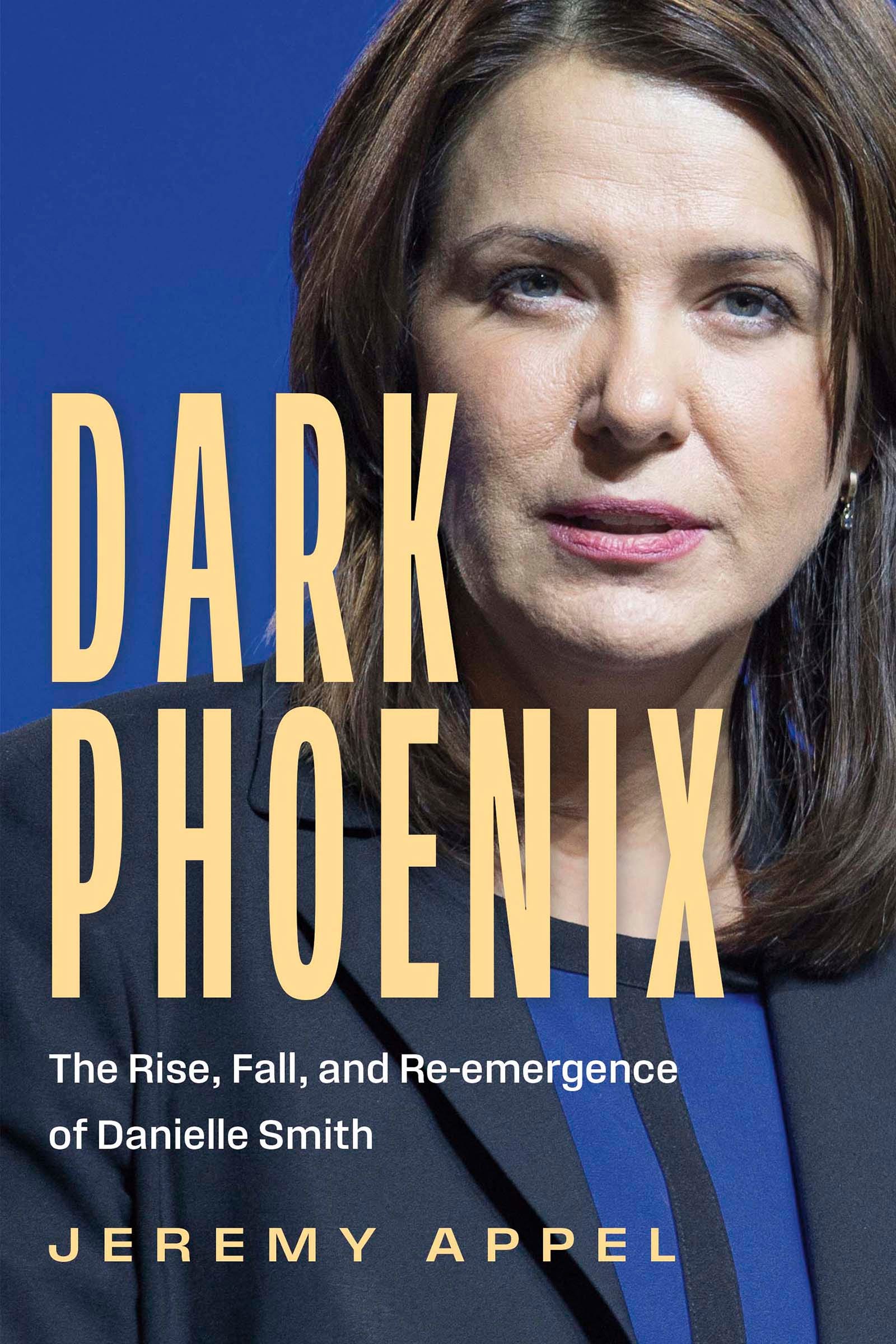
My new book, Dark Phoenix: The Rise, Fall, and Re-emergence of Danielle Smith, is coming out Oct. 13. It details how Smith was able to mount her remarkable political comeback by embracing conspiracy theories from the darkest corners of the internet and communicating them in terms palatable to the broader public.
I’m urging readers to pre-order it, which signals interest to booksellers and helps place it on bestseller lists, which in turn generate media interest.
I’ve got stiff competition on Oct. 13, with the release of former deputy prime minister Chrystia Freeland’s hilariously titled memoir, Unavailable Boyfriend.
Through my publisher, Dundurn Press, you can pre-order Dark Phoenix to your local bookstore by hitting the Shop Local tab here. You can also pre-order it on Amazon or Indigo, both of which are offering it for 25% off.
I’ve been humbled by the feedback it’s received so far from journalists, authors and artists I greatly admire.
Here are some of them:
In an age of authoritarian populism, Danielle Smith has emerged as unsettling political superstar. Smith is resilient, dynamic, adaptive, media-savvy as she sells a politics of reactionary nostalgia in the service of the powerful. She is reshaping not just Alberta but Canada. Jeremy Appel’s incisive and crisply-written biography, drawing on deep reporting and research, is essential reading for understanding both Smith’s appeal and the dark future she is promoting.
— Jeet Heer, national affairs correspondent for The Nation and host of The Time of Monsters
When encountering a politician like Danielle Smith, it's sometimes hard to truly grasp why they do the things that they do — and, more importantly, how they keep getting away with it. In Dark Phoenix, Jeremy Appel demystifies these questions. Through gripping writing and immaculate research, he paints a clear picture of what drives Smith: naked opportunism. It's a chilling tale of a woman who appears to be motivated by nothing more than her own ascent — and it's only in understanding both her thinking and the tactics she uses to achieve her goals that we can truly push back. Dark Phoenix is an important read for any anyone seeking to understand Alberta politics and its unhinged premier. It's even more essential as a case study of a kind of politician that is all too common these days.
Dark Phoenix is a powerful and highly engaging account that delves deeply into the intriguing story of Danielle Smith’s alarming rise and consolidation of power. Jeremy Appel has done a first-rate job documenting how seamlessly and ruthlessly she has championed the interests of Big Oil, the far-right and provincial separatists, and how her street-smart political skills now pose an immense risk to Alberta — and to Canada as a whole.
— Linda McQuaig, author of The Sport and Prey of Capitalists, Shooting the Hippo and Behind Closed Doors
Like Rick Perlstein's Nixonland, Jeremy Appel uses the details of Danielle Smith's life, from the shocking and enraging to the banal and deeply hilarious, to capture a cultural and political shift in Canada. Appel reveals Smith, with her uncanny ability to project empathy and normalize extremist ideas, as a defining figure in our neo-authoritarian age; where the role of government is to enact and enforce the policies of capital, while acting as the stage for reactionary grievance theatre. A must-read for anyone interested in Canadian politics.
— Jordan Foisy, comedian and lead writer for This Hour Has 22 Minutes
Finally, if you live in Edmonton, I’ll be hosting a book launch at the Aviary on Oct. 13, where my friend Dani Paradis, who’s currently working on a book of her own, will be interview me about Dark Phoenix on stage.
Tickets are $25 in advance, $30 at the door and include a copy of the book. I should have an event link ready in the coming days, which I will of course share widely. But in the meantime, mark your calendar!
These are legitimate criticisms, and an argument can be made for reforming most, if not all, pension plans. However, I seriously question the tactical wisdom of going after the CPP at this critical moment when the UCP is threatening to to take the money and run!!!.
Of course the UCP would (THEY tell us) put the money into a new shiny Alberta Pension Plan!
Given how, in the past, our public sector plans have been mismanaged, the chances the UCP intends to increase support for either the environment or First Nations are slim to none and (as they say) "Slim has left town"!!!