

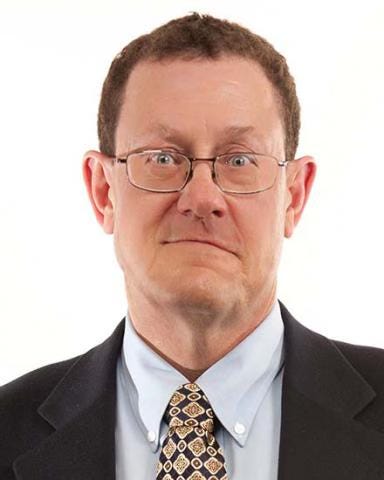
Two Hills landowner Dwight Popowich filed an ethics complaint with the Alberta Energy Regulator (AER) in late January alleging that its board member David Yager was in violation of the AER’s conflict of interest policy.
As a condition of proceeding with his complaint, AER board chair Duncan Au demanded Popowich agree to a closed door off-the-record discussion without any electronic devices present, with only a lawyer of Au’s choice permitted to attend.
Susanne Calabrese, a lawyer from the environmental law firm Ecojustice who’s representing Popowich, told The Orchard that she’s “never seen” anyone “forced into some secret meeting with all these conditions before [they] can even be heard on their substantive complaint.”
In a letter to the entire AER board sent this morning, Calabrese argues that Au’s “extraordinary response” to her complaint represents an additional violation of the regulator’s Conflict of Interest Policy and Procedures.
“This is really unprecedented. It’s really a new low for the rule of law, and it’s quite surprising how blatantly they’re breaking their own rules,” she said in an interview.
The complaints to the AER are the second avenue Ecojustice has pursued to address David Yager’s apparent conflicts of interest. Readers of this newsletter might recall that in July 2025, Calabrese wrote to Ethics Commissioner Shawn McLeod accusing Yager of violating the province’s Conflict of Interest Act.
Yager, an oilfield consultant, was appointed to the AER board in April 2024 by Premier Danielle Smith, to whom he’s described himself as a “special advisor.”
Yager has received $422,000 in sole-source contracts from the provincial government, the bulk of which consists of work on the so-called “Mature Asset Strategy,” which would see the province establish Crown corporations to purchase inactive oil and gas wells from their owners and extract what’s left in them royalty-free to fund their eventual recovery.
Popowich, who chairs the Polluter Pay Federation and is a member of the Coalition for Responsible Energy and Alberta Surface Rights Federation, has had an inactive gas well in the middle of an alfalfa field on his farm about 135 km east of Edmonton for more than a decade.
In December, McLeod, a former UCP nomination contestant and donor, dismissed the complaint without evaluating its substance, arguing that Yager is not a direct employee of the premier, but a contractor, so the act doesn’t apply to him.

Undeterred, Calabrese filed a complaint with the AER, arguing that Yager’s directorship violates their own policies.
The AER’s Conflict of Interest Policies and Procedures, part 1, section 8, prohibits AER members from participating in activities that “cause an actual or perceived conflict of interest (e.g., involvement in companies that the AER directly or indirectly regulates).”
“You can’t represent the partisan interests of government, the private interest of industry, the arm’s length responsibility of a regulator, and the interests of the public all at the same time,” said Calabrese.
Under section 20, AER employees who are found to have violated the policy “may be subject to disciplinary action, up to and including termination of their employment or engagement.”
Calabrese said that while the AER has a strong conflict of interest procedure on paper, it’s not being followed, which is part of a broader pattern critics have noted with the AER.
“They have rules of all types they don’t follow or enforce,” said Calabrese.
The conflict of interest policy’s rigorous enforcement, however, would lead to trouble for all nine AER board members, whose ties to the industry they’re tasked with regulating are freely advertised on the AER website
Ecojustice submitted its complaint on behalf of Popowich on Jan. 28 and on Feb. 3, the AER requested an in-person meeting in Calgary with Popowich and Calabrese, who wrote the complaint.
A meeting was proposed for Feb. 17, but when the AER was informed that in addition to Calabrese, Popowich would be represented by lawyer Ecojustice climate director Charlie Hatt, Au refused to let Hatt participate, arguing that the meeting has nothing to do with climate policy.
In a Feb. 11 conversation with Au, Calabrese proposed a virtual meeting with Toronto-based Ecojustice finance lawyer Tanya Jemec instead of Hatt. Au responded that he wanted an in-person meeting so that it couldn’t be easily recorded.
Au added that he didn’t want to put this in writing out of concern that Ecojustice would make it public.
“He told me that he thought our claims were insufficient, and that at the meeting he was just going to tell us why that was the case, but he didn’t want a recording of it,” recalled Calabrese.
She noted that under the AER’s policies and procedures, it’s not the chair’s job to determine whether a complaint is valid or not.
Part 1, section 4.2 tasks the regulator’s ethics committee, which is appointed by the board chair, to “ensure that all allegations and claims against members or employees who are alleged to be in breach of the Conflict Policy will be reviewed by a qualified, fair, and impartial individual.”
“There’s no wiggle room. They must appoint an investigator,” explained Calabrese.
After Calabrese informed Au that she wouldn’t abide by his stringent conditions for a meeting, Au wrote her a Feb. 24 email, saying that the AER is “open to a meeting and would welcome the opportunity to do so should you and your client reconsider.”
“In the meantime, we will be putting your request for an investigation on hold, awaiting your response,” he added.
Popowich told The Orchard that he sees Au’s insistence on an off-the-record meeting as a “pressure tactic” from AER “big shots.”
“That’s what they were trying to do — intimidate us, push us around,” he said. “No, not going to play that game.”
This piece has been updated with additional biographical details about Dwight Popowich.
The You See Pee Alberta governments 'mature asset strategy' likely goes hand in hand with Danielle's belief that the CO2 captured from publicly funded Carbon Capture won't be going to 'Storage' but create a new revenue stream............and more pipeline construction, this time CO2 pipelines heading for unclosed oil and gas wells on farmer's fields. Alberta will suck the last dregs out of every unclosed well, and just ferget about what happens to the CO2 pumped into those old wells to coax out the last few barrels of oil.
The complainant in this case can look forward to losing every attempt to hold any Alberta government responsible. AER is a captured organization, David Yagar and his ilk the sole beneficiaries........and Alberta doomed to play the 'end of the world' oil game going forward.
Wars in the Middle East are part of it too. We need to keep the population so distracted with fossil fueled weapons of mass destruction blowing up oil assets abroad, that Albertans will continue to vote for boondoggles like Carbon Capture, while ignoring the damage to agricultural fields we're actually going to need to feed us..............in the not too distant future.
We've already paid for this.